

Bethlehem Live Weather Camera sponsored by St. Luke's University Health Network
-
 The Allentown Environmental Advisory Council is examining three of the city's largest buildings to identify potential opportunities to boost efficiency and cut costs.
 -
Lehigh Valley residents eager to begin their spring gardening are looking toward the last frost and freeze dates for the area — but they'll have to be patient.
-
Ruth Santiago, an attorney and environmental activist in Puerto Rico, is returning to the Lehigh Valley this month to speak to students and residents about alternative electrical systems and environmental equity amid climate change.
-
Take a look at stories throughout the week of which we are most proud, had a profound impact on readers or that you might want to look at again.
-
The commonwealth is getting $265.9 million in federal funding to upgrade its aging water infrastructure. The state has the fourth most lead pipes in the nation, according to a recent EPA survey.
-
The spring migration count at Hawk Mountain has begun. So far this season, 137 birds of prey have been recorded.
-
Allentown’s Cedar Creek Park was covered Thursday in lesser celandine, a low-growing, mat-forming flower that’s been flagged by the Department of Conservation and Natural Resources.
-
It’s not unprecedented, but it is a little bit too early for the kind of warmth the Lehigh Valley will see next week, said meteorologist Bobby Martrich.
-
The U.S. Environmental Protection Agency on Tuesday released the results of the agency's "7th Drinking Water Infrastructure Needs Survey and Assessment." Pennsylvania ranked only behind Florida, Illinois and Ohio for the most lead service lines.
-
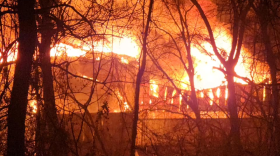
Firefighters battled a massive fire at a warehouse in West Easton early Tuesday, with multiple explosions heard from the property. The fire was declared under control after more than five hours.









-
Four surplus male bison from the Lehigh Valley Zoo will be donated to the Wildlife Restoration Foundation for transfer to a member of the InterTribal Buffalo Council in New York. The recent loss of the dominant male bison at the zoo necessitated the transfer.
-
Space weather forecasters have issued an alert for incoming severe solar storms. Such storms could bring northern lights to many U.S. states and temporarily disrupt communications.
-
The draft plan is the product of a series of well-attended public-input meetings over the past year.
-
For the second year, the nonprofit water and wastewater utility has launched a public outreach campaign about lead pipes. Under a new EPA rule, utilities have until 2037 to remove all lead service lines from its system.
-
The Allentown EAC on Monday approved two letters to City Council with recommendations for the citywide parks plan, as well as the city's first Climate Action Plan, respectively.
-
Three African Servals escaped from Cricket Wildlife Center after a powerful storm last Wednesday damaged their enclosure. After dozens of reported sightings, two of the wild cats are back, leaving one left to capture.
-
For November, WLVR's Brad Klein and Bethlehem's "Backyard Astronomy Guy" Marty McGuire are taking a look at comets, with three getting a lot of attention as they pass through our inner solar system. This week, the subject is astrophotography.
-
The speaker series, which runs on select Thursdays through March, focuses on engaging residents about the local environment, as well as conservation efforts.
-
Craig Pfeiffer, Bethlehem's assistant director of planning and zoning, gave a presentation Thursday on the city's new subdivision and land development ordinance, more commonly known as a SALDO.
-
The baby alpaca was born Oct. 23. The zoo is taking suggestions for a name.
-
A Wednesday night storm brought damaging winds to the area, with gusts reaching up to 47 mph. The National Weather Service warned of damage to trees and utilities, and a wildlife center in Berks County suffered just that: A tree fell on an enclosure housing three African servals that have since escaped.
-
Current conditions, along with the continued drying of fine fuels, "could support the rapid spread of any fires that ignite, which could quickly become difficult to control," the National Weather Service said.