-
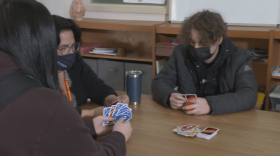
 LVPM/A revised childhood vaccination schedule was put in place this year reducing the number of recommended vaccines from 17 to 11. Some parents around the Lehigh Valley are confused about what schedule they should follow.
 -
Without enhanced tax credits for the Affordable Care Act, Lehigh Valley residents have seen their Pennie premiums climb more than $300 a month on average.


Lehigh Valley Heart and Vascular Institute now offers treatment for atrial fibrillation (AFib) with a new system that uses pulsed electrical fields to target problematic heart muscle cells instead of extreme heat or cold.
Health & Wellness News
-
 A local oncologist is giving some insight into the cancer diagnosis of Kate Middleton. The St. Luke's doctor specializes in gastrointestinal cancers and talks about what the Princess of Wales could be experiencing.
 -
As Miller-Keystone Blood Center is set to no longer be the primary supplier of one of its largest customers, supporters are speaking out about what the nonprofit center has done for them. Blood donors, recipients and coordinators are sharing their life-saving stories.
-
The women of Sixth Street Shelter in Allentown were hosted for a luncheon to culminate National Women’s Month. The women executives from Bear Creek Mountain Resort met with them to talk about women in leadership and business.
-
WLVR's Megan Frank talks with journalists Brittany Sweeney and Jay Bradley.
-
For the third year in a row, St. Luke's University Health Network topped health systems in Pennsylvania for charitable giving, according to the Lown Institute.
-
St. Luke's University Health Network is offering a health and wellness program to businesses in the Lehigh Valley aimed at keeping employees safe. The program has already helped reduce the instances of workplace injuries.
-
Psychedelic mushrooms are being studied by the medical community to treat issues like anxiety and depression. A Muhlenberg College professor is weighing in with where the research stands and if we could see the legalization of the drug anytime soon.
-
New policy to combat systemic racism is in place at LVHN. The Valley's largest employer has new protocols in place following accusations of racism from a resident.
-
Russian-tied BlackCat hacker group attacked another health care system in February, what does it mean for cybersecurity in hospitals?
-
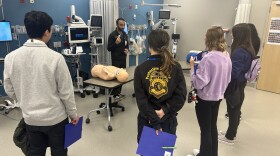
Lehigh Valley Health Network and Lehigh County Drug & Alcohol are training high school and college students for medical careers. The program aims at bringing more support to the community to make it a safer place to live.
-
Dr. Debra D. Esernio-Jenssen, a Lehigh Valley Health Network physician facing multiple lawsuits over alleged child abuse misdiagnoses, has announced her retirement. Separately, Lehigh County announced it will create a new "community centered" Child Advocacy Center.
-
An art show centered around mental health and disabilities is opening in an unlikely place. Midnight Gallery is in the showroom of Vollux Autowerks, a car repair and diagnostics shop in Lehigh County.








-
One solution is to allow more clinicians to give a diagnosis of autism.
-
It takes a special person to be a caregiver, one who wants to help.
-
Frances Wolf says hunger should never be what holds a person back from succeeding in higher education.
-
Three credit reporting agencies have said they will remove medical debt from credit reports that went into collections but were paid off.
-
The company has gained jobs as its IntelliSwab COVID rapid test kits have entered the market.
-
The U.S. is experiencing a 'honeymoon' period right now.
-
A local LGBTQ advocate says it's no surprise the 4-star admiral is among the 12 women of the year.
-
There are many reasons people of color are at greater risk for diabetes and stroke, Thevenin says.
-
A local therapist recommends talking to someone, either a friend or a professional.
-
COVID-19 has caused health care to adapt to changing conditions.
-
Starting Monday, mask-wearing will be optional for city employees and city hall visitors.
-
The two-year global health crisis has had a huge impact on young people's mental health.