BETHLEHEM, Pa. — Political prognosticating is risky business — just ask anyone who assumed Joe Biden would appear on the 2024 ballot.
But as 2026 draws near, some political headlines appear set in stone for the months ahead.
Here's a breakdown of what voters can expect in the new year.
Congressional midterms
The margins in Washington are razor thin as Republicans seek to protect their narrow control of the U.S. House. The road to a majority may run through the Lehigh Valley and Pennsylvania's 7th Congressional District.
The battleground seat is one of a handful of tossup districts in the country, and the two parties are expected to pour enormous resources into persuading voters here to support their preferred candidate.
U.S. Rep. Ryan Mackenzie, the Republican incumbent, is expected to seek a second term. While he's been a vocal supporter of President Donald Trump, there's been some fractures between himself and House leadership over preserving Affordable Care Act tax credits.
Meanwhile, five Democrats have launched campaigns against him — firefighter union boss Bob Brooks, former federal prosecutor Ryan Crosswell, Northampton County Executive Lamont McClure, energy engineer Carol Obando-Derstine and Lehigh County Controller Mark Pinsley.
After years of low-spending primary fights, the 2026 Democratic primary could get heated. Crosswell has started utilizing a nationwide donor network while Brooks could tap into donors from his most high-profile supporter, Gov. Josh Shapiro.
Pennsylvania's gubernatorial race
While the congressional midterms will attract most of the national media's attention, 36 states will elect a governor this year, including Pennsylvania. And while there's still time for candidates to enter the race, the parties in the Keystone State appear to have coalesced around their picks for the top of the ticket.
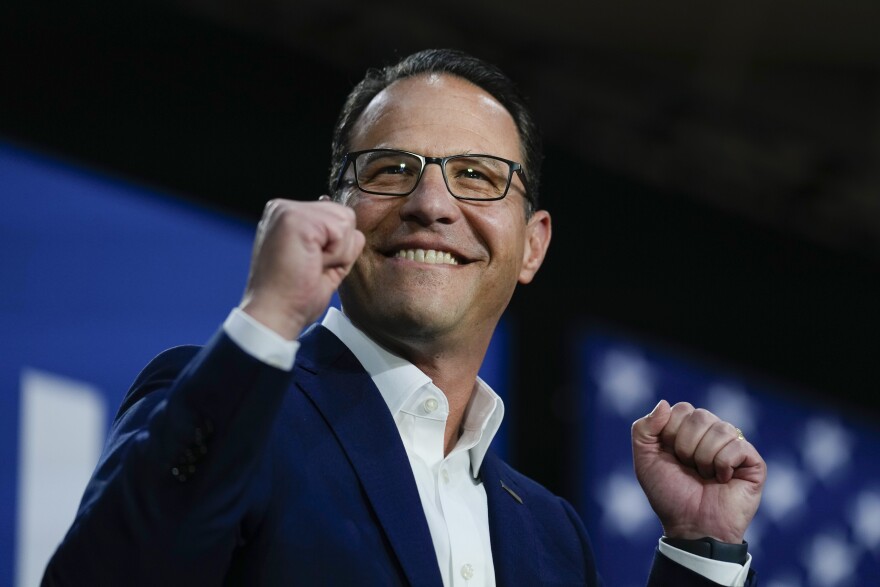
Shapiro, the Democratic incumbent, has a clear path to his party's nomination. A Franklin & Marshall College Poll from October found that 51% of registered voters in Pennsylvania believe Shapiro is doing an excellent job compared to the 40% who believe he's doing a fair or poor job. In an era where presidential approval ratings are frequently underwater and voters are antsy about the economy, that's an unusually strong showing. He's gotten similar scores since taking the governor's mansion, so it's not an outlier poll, either.
He'll likely face Republican Stacy Garrity, who was elected state treasurer in 2020. Most of her potential rivals have cleared the field and endorsed her, including U.S. Rep. Dan Meuser, R-Pa., and state Rep. Scott Martin, R-Lancaster. The lone exception is state Sen. Doug Mastriano, R-Adams, whom Shapiro trounced in the 2022 election.
Garrity showcased what's likely to be her campaign strategy during Vice President JD Vance's recent visit to Lehigh County. There, she urged Pennsylvanians to ditch Shapiro for someone who will work with the Trump administration instead of against it. Shapiro has sued the Trump administration after it slashed funding for electric vehicle projects, SNAP benefits and public safety while the Trump administration has sued Pennsylvania in an effort to unveil part of the state's voter registration data.
The race for the governor's mansion may have national implications as well. Many Democrats are eying Shapiro as a potential presidential nominee. While he's downplayed interest in the past, he's acting the part between his visits to other states and the upcoming release of his political memoir. For Republicans, defeating Shapiro or at least making him earn a close-fought race would dim his star ahead of the 2028 election cycle.
General Assembly
Whoever the next governor is, they'll likely be hoping their party can claim a wider majority in the General Assembly. Republicans momentarily hold a one-seat majority in the Pennsylvania House of Representatives, but Democrats will likely regain their one-seat majority once special elections are held in February.
Meanwhile, Republicans hold a narrow majority in the state Senate. The divided government has contributed to the gridlock in Harrisburg, which saw the state budget get approved four months late in 2025.
As per usual, the Lehigh Valley is home to one of the biggest political battlegrounds in the state. Pennsylvania's 137th District, based in Northampton County's suburbs, is divided almost evenly between registered Democrats and Republicans; the 10,000 voters registered as independents or to third parties will likely decide the race.
Northampton County Commissioner Jeff Warren, a Bethlehem Township Democrat, has already launched a campaign against state Rep. Joe Emrick, the Republican incumbent.
On the other end of the political spectrum sits Pennsylvania's 22nd House District. While Democrats hold a significant advantage in the district, the party will need to nominate a candidate to succeed Josh Siegel in the special election. The lopsided party registration means that less than two dozen local Democrats will likely select the person to represent more than 62,000 people in Allentown and Salisbury Township.
2025 winners will need to govern
Democrats had a strong showing in the 2025 election. Democratic candidates grew their majorities on the Lehigh County and Northampton County boards of commissioners and won both county executive posts by wide margins. But once they take their oaths of office, they'll need to deliver on their campaign promises.
Lehigh County Executive-elect Siegel made some big ones on the campaign trail, proposing the creation of a sales tax that would allow lawmakers to lower property taxes and exploring countywide police and fire departments. But he says it's his pledge to build subsidized housing that will be his top priority in the new year. The plan would require Siegel to partner with other local governments so they could pool $100 million toward constructing thousands of apartment units across the region. Allentown Mayor Matt Tuerk has expressed interest so far, but Siegel will need more communities on board to make his promise a reality.
Northamtpon County Executive-elect Tara Zrinski ran on a more modest platformof improving services at Gracedale and preserving county services as the federal government cuts spending and pass-through grants.